
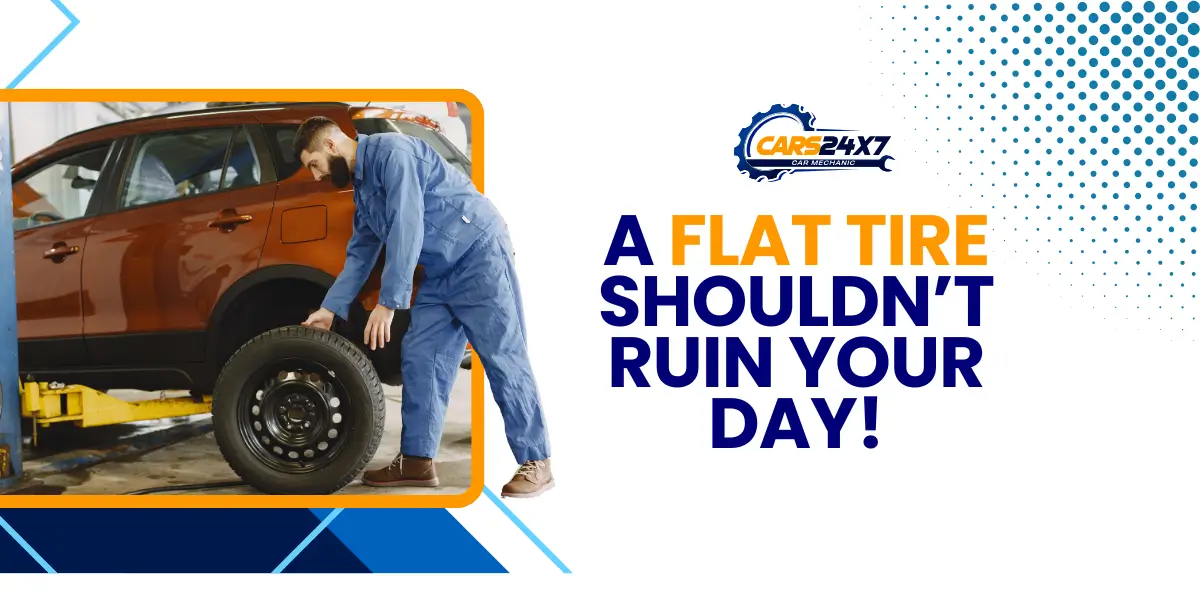
 Winnipeg’s unpredictable weather can cause road conditions to change from area to area. You may need to repair your car anytime. As such, knowing basic car repairs, like how to fix a flat tire, can help a lot.
Flat tires can happen anytime, Whether in a snow-laden winter street or a pothole in spring. Knowing how to fix it saves time and keeps you safe on your trips.
In this blog, we explore some practical steps for you to hit the road again confidently, knowing how to fix a flat tire promptly.
How Flat Tires Can Cause Major Issues?
Flat tires may seem like a minor issue, but ignoring it can quickly snowball into multiple major problems:
- Threat to safety: Driving on flat tires increases vehicle instability and braking distance, which may cause accidents.
- Damage to the rim: Continuing your drive on a flat can damage the rim of the wheel, which may lead to the repair cost increasing even more.
- Irreparable tire: Delaying the repairs too much may make it impossible to patch the tire afterward, and you may necessarily need to get a new tire to replace it.
- Inconvenience: A flat tire left unattended can even leave you stranded in a remote place, interrupting your plans and stressing you.
Flat tires are thus not something you can ignore. Repairing or replacing the tire immediately ensures your car and wallet remain safe.
Steps to Fix a Flat Tire in Winnipeg
Follow the below-given steps to fix the flat tire immediately:
Step 1: Ensure safety first
- Park your car in a safe spot, comfortably away from traffic.
- Find a flat surface and turn the hazard lights on.
- If the visibility is low, use warning triangles behind your car.
- Make use of the parking brake so that the vehicle does not move.
Step 2: Gather necessary tools
Keep the below-mentioned items within your reach before working on repairs:
- A compact or full-size spare tire
- Car jack
- Lug wrench
- Tire pressure gauge
- Owner’s manual in case you need a reference
If you don’t have these tools at the time, it is recommended to call a professional car repair service such as Cars24x7.
Step 3: Loosen the lug nuts
Use the lug wrench to pry the nuts loose on the flat tire. Turning them anticlockwise can loosen and remove them, but don’t remove them altogether. Loosening the nuts while the tire is still on the ground gives you more leverage.
Step 4: Lift the car with the Jack
Position the Jack securely under the car’s designated lift point as specified in the owner’s manual. Ensure the Jack is stable before lifting. Raise the vehicle gradually until the flat tire is elevated approximately 6 inches off the ground, providing adequate clearance for removal and replacement of the tire.
Step 5: Remove the flat tire
Fully unscrew the already loosened lug nuts and place them in a secure location, as they will be needed later to secure the new tire. Carefully pull the flat tire straight off the wheel hub and set it aside in a safe spot to avoid interference during the replacement process.
Step 6: Mount the spare tire
Fully unscrew the already loosened lug nuts and place them in a secure location, as they will be needed later to secure the new tire. To mount the spare tire, lift it and align its holes with the lug bolts. Once aligned, push it onto the hub firmly to ensure a proper fit.
Step 7: Tighten the lug nuts
Put the lug nuts in place again and tighten them by hand as much as possible. After this, you need to lower the car slightly so that the spare tire touches the ground but does not bear the full weight yet. Tighten the nuts in a star pattern using the lug wrench to ensure even pressure.
Step 8: Lower the car completely
Fully unscrew the loosened lug nuts and keep them in a secure spot for reuse. Remove the flat tire and set it aside safely. Mount the spare tire by aligning it with the lug bolts and pushing it firmly onto the hub. Lower the Jack and tighten the lug nuts securely.
Step 9: Check tire pressure
Before continuing your trip, it is a good idea to use a pressure gauge and ensure that the spare tire has the recommended pressure. You can find the recommended air level listed in the car manual or on the driver’s side door frame.
Step 10: Visit a repair shop
Spare tires are temporary solutions to take you out of the rut. You still need to visit a car mechanic shop in Winnipeg to get the flat tire repaired or replaced. Driving too long on the spare tire can result in even more damage.
Why Professional Help Matters?
Although it is relatively easy to fix a flat tire yourself, professional help can still be important for a number of reasons:
- Severe tire damage: A tire having a large puncture or sidewall damage may be irreparable. It is important to check that out.
- Lack of tools or experience: Without the right tools or know-how, DIY repairs can be unsafe.
- Winter weather: The harsh, icy conditions during winters in Winnipeg make even roadside repairs risky. Professionals can advise you on how to keep your car safe in these conditions.
Preventing Flat Tires in Winnipeg
Prevention will always remain better than cure. Here is how to reduce the chances of your tire going flat:
- Maintain tire pressure: Check and maintain the recommended pressure levels at all times.
- Check tread depth: You should replace tires when the tread depth is too shallow so that the grip does not lax.
- Avoid potholes: The roads in Winnipeg can be rough, so avoid them safely and avoid such hazards.
- Keep a tire repair kit: Repair kits are useful for a quick fix till the time you get to a car mechanic, especially for minor punctures.
Ready to Fix Your Flat Tire? Contact Cars24×7 Today!
Whether it is a quick repair or a full replacement, professional help from Cars24x7 is just a call away. Our automotive repair workshop offers reliable services for your car to fulfill all your needs.
Don’t let a flat tire slow you down on the Winnipeg roads next time!